


Fashion, at its highest level, has never been about clothes alone.
It’s about relationships—between makers and muses, between discipline and fantasy, between the body and the imagination.
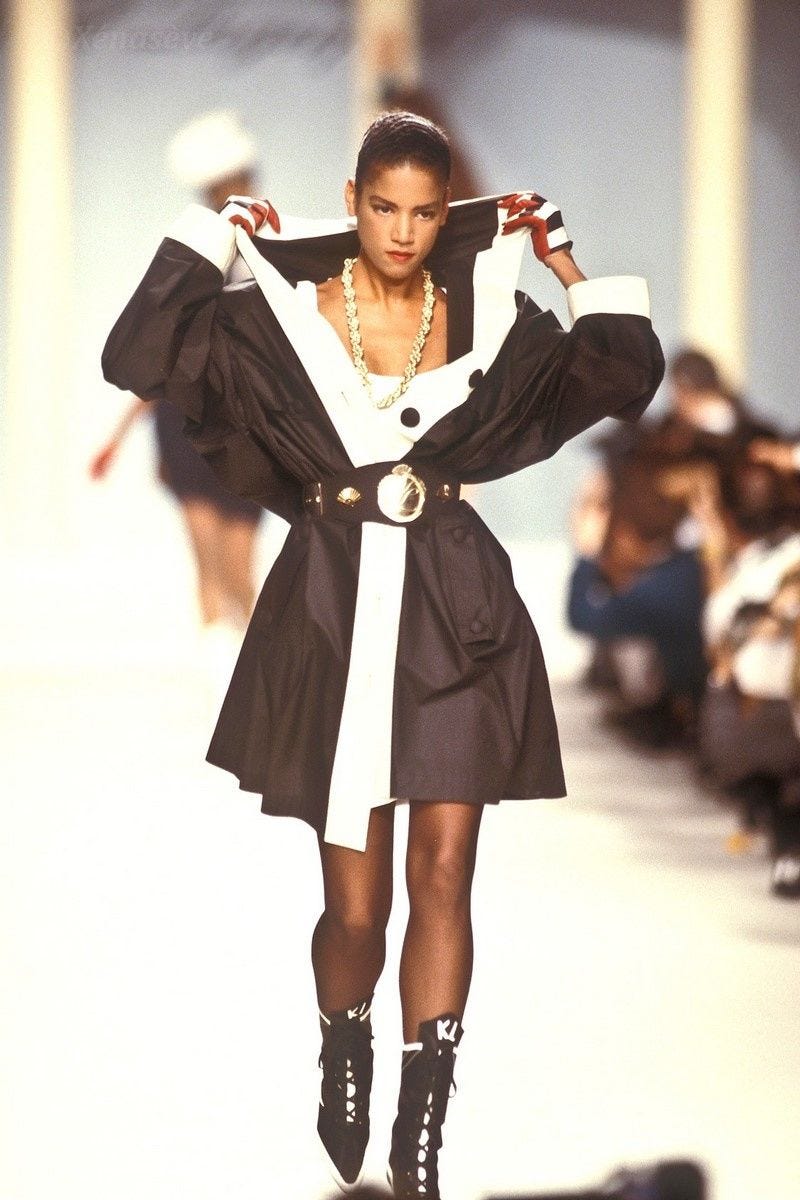
Before I ever stepped onto a runway, fashion entered my life through my mother’s hands. She made nearly everything I wore as a child, and those early rituals—choosing yarns, touching fabrics, understanding time and care—shaped my lifelong definition of chic. Not consumption, but intention.
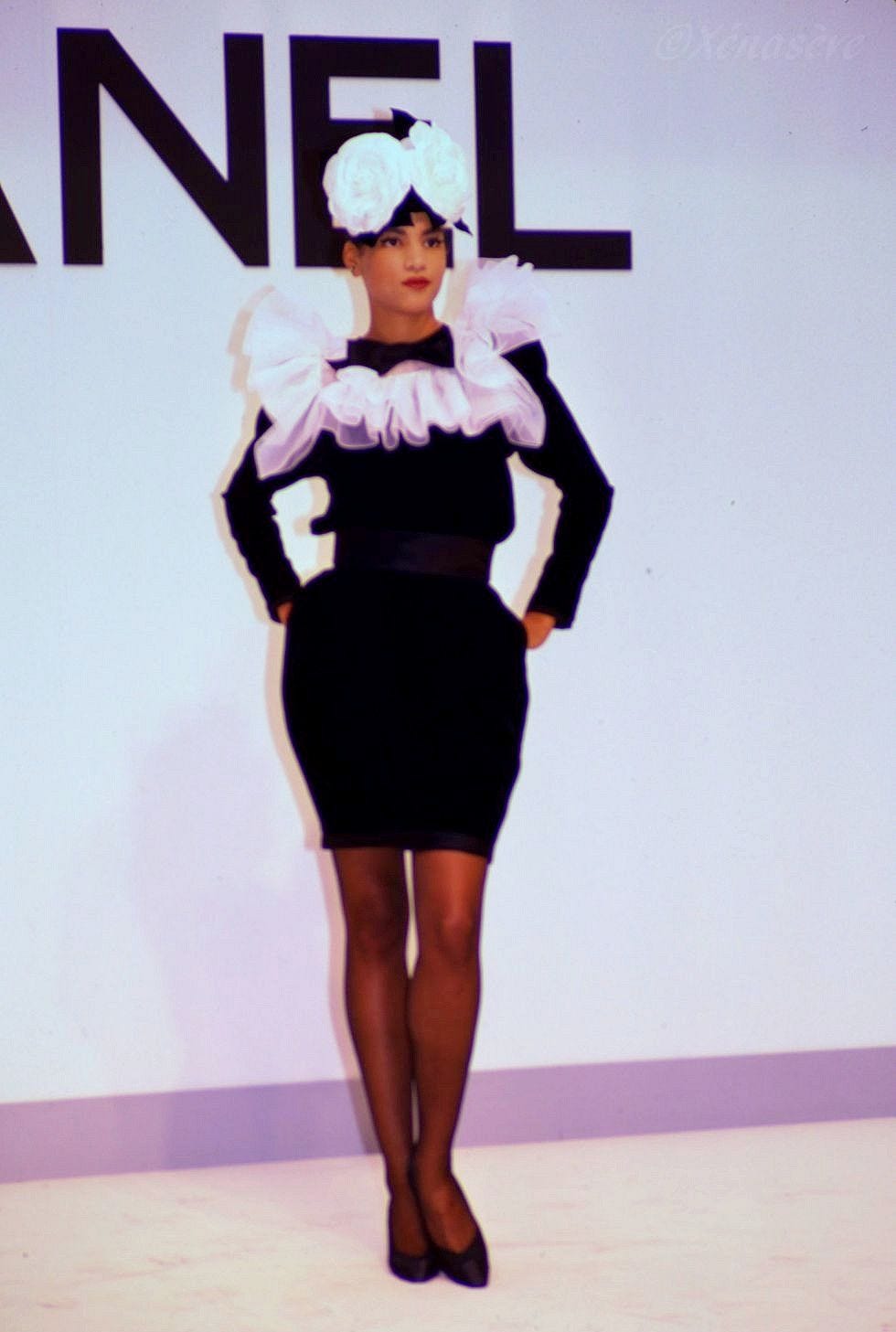
That foundation carried me into the world of Paris runway shows, where nothing was casual and nothing was accidental.
Runway was the most demanding discipline a model could master.
There were no second takes, no improvisation, no safety net. Each look carried the weight of an entire collection, sometimes an entire season, and when you stepped out, you were carrying the house with you.
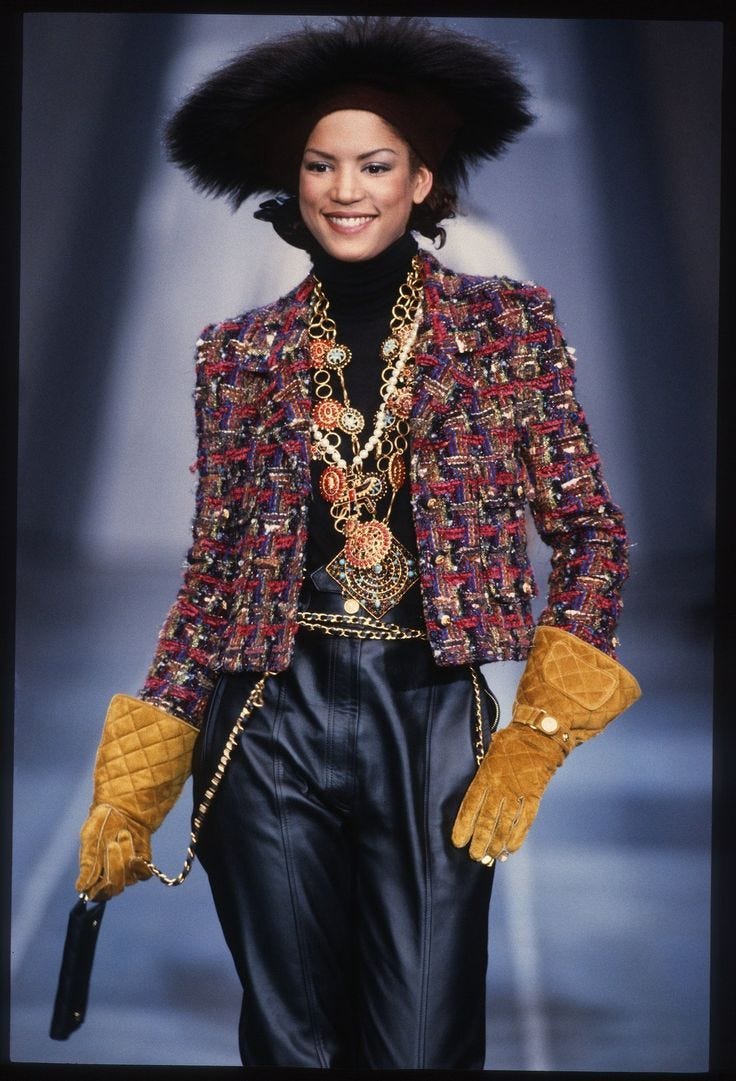
My years working with Chanel—and with Karl Lagerfeld in particular—were marked by rigor, generosity, and an almost electric sense of creative urgency. Karl’s curiosity was boundless. Fittings felt like rehearsals for possibility. Backstage was chaos, yes—but exquisitely choreographed chaos, animated by artisans, editors, royalty, rock stars, and the collective belief that something singular was being made in real time.
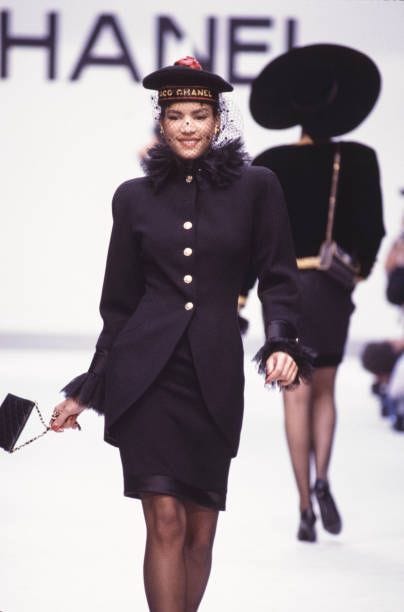
Couture then was defined by time and touch. Endless fittings. Every specialist present. Garments shaped not just to the body, but to movement, posture, and presence. It’s difficult to explain couture without seeing it up close—without understanding that intimacy between maker, garment, and wearer was the point.
Love this, so glad you're on Substack Veronica Webb!